
Production depends on it.
Customers, revenue or core processes run through this environment. Every rebuild therefore has to happen in steps that can be taken back individually.

Freelance AWS Architect
If your AWS environment has grown, carries production and still nobody can say why the bill looks the way it does or what a region outage would mean, you do not need a slide-deck architecture. I work in existing environments: measure, clean up, rebuild, secure, all described in Terraform and in steps that do not stop operations.
As part of your team or delivering independently, at a fixed price or by time spent to suit the project.
Remote from Germany. Straight with me, no agency in between.
The starting point
Most AWS environments I see were never designed. They accumulated: one account, then two, instances from a migration weekend, security groups from back then, a NAT gateway quietly eating money for years. Everything works, and that is exactly the problem – it works until the bill stands out, an audit asks questions or a region wobbles. Then it turns out nobody holds the environment as a whole in their head.
I have worked in exactly such environments for years, as an AWS Certified Solutions Architect – Professional, plus Security – Specialty and Terraform Associate, all publicly verifiable via Credly. More important than the certificates are the documented results: I brought two grown accounts from 15,000 to 2,500 euros a month, with the same feature set. I modernized and migrated the revenue reporting of an AdTech platform with nine-figure turnover to AWS while it kept running, from zero to one hundred percent infrastructure as code. And the attribution service from my case studies runs in two regions, because a region outage there is meant to be an event, not an incident.
The difference to a classic cloud consultant: I do not leave a recommendation behind, I implement. First comes measurement, in the Cost and Usage Report, in the incident history, in the architecture itself. Then the rebuild happens in steps, each deployable on its own, each with a way back, while production keeps running. At the end the environment is described in Terraform, and your team can change it without asking me.
The honest limit belongs here too: I am not a managed service provider and do not want to operate your environment permanently. The goal of every engagement is that your team gets on without me. If you are looking for someone to guard the console indefinitely, I am not the right person, and I will say so in the first call.
Situations I get called intoWho this is for
This page is for CTOs, engineering leads and platform owners whose environment is productive and has grown over years: a SaaS, a platform or internal core systems. This is not about a first experiment in the cloud, but about responsibility for what already runs there.
Customers, revenue or core processes run through this environment. Every rebuild therefore has to happen in steps that can be taken back individually.
Cost, resilience, an audit or an upcoming migration: the question is concrete, and a wrong answer costs measurable money.
No permanent consultant, no operations contract. Infrastructure as code, documented decisions and a handover after which your team can make changes itself.
What I do
Taking stock of the environment as it really is: accounts, networks, data flows, cost structure, recovery. The result is a written assessment with risks, effort and an order of work, sorted by what costs money or sleep first.
FinOps based on the Cost and Usage Report: clean up and measure first, then architecture and capacity, commitments last. In my longest documented case, 15,000 euros a month became 2,500, with the same feature set – the path there is written up as a field report on the blog.
From the data centre or another cloud, with a cost model before the decision instead of a surprise after it. Landing zone, network architecture and baseline security are built along the way, and the move runs in steps that do not stop operations.
Not "highly available" as an adjective, but RTO and RPO as a decision: what may an outage cost, how quickly must what be back, and which architecture follows. Multi-AZ is often enough, multi-region sometimes, and I show you the arithmetic instead of selling the bigger option.
Hand-managed environments are moved into Terraform, step by step and without a rebuild: import, describe, reconcile. Afterwards every change is a review instead of a console click, and a second environment is a plan run instead of a weekend.
Not a separate security consultancy, but the foundations every business-critical environment needs: IAM with least privilege, separated accounts, encryption, audit logging, secrets out of the code. As an AWS Certified Security – Specialty this is part of the rebuild, not an add-on offer.
Specific cases
Tell me about your AWS environment.
30 minutes, directly with me. You describe the situation, I tell you honestly whether I am the right person – and if not, I say so in the same call.
How it runs
Four steps, and after the second you have an assessment you can act on even without me. No step commits you to the next.
You describe environment and trigger: cost, an audit, a migration or an incident. I tell you whether I am the right person and what I would look at first.
Read access is enough. I read the Cost and Usage Report, the architecture and the incident history; the outcome is a written assessment with risks, savings and an order of work.
One measure, one rollout, one result, then the next. Everything described in Terraform, every step individually reversible, production keeps running.
Runbooks, documented decisions and infrastructure as code your team can change itself. No operations contract, no dependency on me.
The outcome
Every major line item has a name, an owner and a reason. Whether it shrinks or stays becomes a decision, not fate.
Terraform describes what runs. Changes go through review, a second environment is reproducible, and the console click from back then is no longer a source of truth.
RTO and RPO are set, recovery is written down and rehearsed. What a region outage means is established before it happens.
Access, code and knowledge stay with you. You can do the next rebuild yourself, with me, or with somebody else – that is the point.
Technologies I use
From practice
Two grown AWS accounts for production and staging, systematically cleaned up and optimized: tidy up and measure first, then architecture and capacity, commitments last. Same applications, same users, same availability.
Read the case studyAlso from real projects
The revenue reporting of a global AdTech platform, modernized and migrated to AWS while it kept running: from zero to one hundred percent infrastructure as code, 90% fewer incidents, and the old path only switched off once both sides had delivered identical numbers for weeks.
Read the case studyWhere four- and five-figure amounts quietly disappear in grown AWS setups – NAT gateways, egress, forgotten retention – and how to get them back without changing a single line of code.
Read the articleHow an engagement ends without leaving a dependency behind: the one test that says anything, the inventory of personal accounts, the swapped roles in the final weeks, and a deadline instead of an open door.
Read the article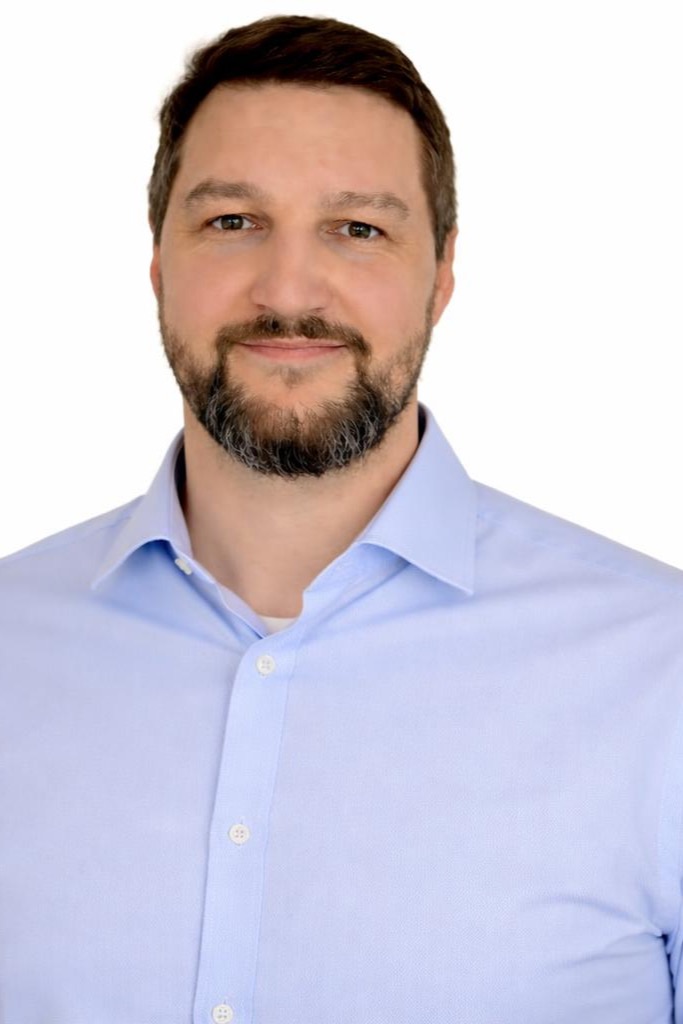
Who you are talking to
I am Tim Rutte. More than 20 years in software development. Today I build business-critical systems on AWS. You talk to the person who touches your code, from the first call to the handover.
Working together
You do not need to bring a particular setup. I adapt the engagement to how your company works and how much responsibility you want to hand over.
If knowledge and responsibilities already sit with you, I join wherever additional experience is needed. Inside your workflows, in direct contact, without creating a parallel track.
If you lack time or capacity internally, I take a clearly scoped piece of work from technical clarification through to production. You set the objective and constraints; I take care of the path there.
Whichever model you choose, you always know what is being built, which decisions are pending and what happens next. Billing follows the project and the model you prefer: clearly bounded work at a fixed price, longer or more open-ended work by time spent.
Continuity
Independent delivery does not create dependency on me. Everything required to develop and operate the result stays in your environment from day one and remains ready for handover throughout the engagement.
Code, cloud accounts, pipelines and secrets live in your systems. Operations never depend on a personal account or credentials that only I control.
Architecture decisions, operating procedures and known risks are documented where your team will find them and kept current as the work progresses.
Reproducible environments, automated deployments and regular handovers allow your team or another provider to continue without starting again.
The goal is not for you to depend on me permanently. The goal is for you to remain free to decide who develops the system next.
Common questions
At a fixed price or by time spent, to suit the project and the model you prefer; I name the range in the first call, once scope and timeframe are clear. The most common entry point has a fixed price: the AWS cost analysis for 2,400 euros, results within ten working days, credited on a follow-up engagement. It also answers the question of whether further work is worth it at all.
AWS Certified Solutions Architect – Professional, AWS Certified Security – Specialty, AWS Certified Generative AI Developer – Professional and AWS Certified Developer – Associate, plus HashiCorp Certified: Terraform Associate. All five are publicly verifiable via my Credly profile. More important than the list are the results in the case studies, because a certificate proves knowledge, not a project.
It is the normal case. Almost every grown environment starts with clicks, and nobody needs to be embarrassed about it. The way out is incremental: what exists is imported into Terraform and described, not torn down and rebuilt. In the migration from my case studies this went from zero to one hundred percent infrastructure as code, while the system kept running.
No, not as the normal case, and that is deliberate. I am not a managed service provider; the goal of every engagement is that your team can operate and change the environment itself afterwards. For that I leave behind infrastructure as code, runbooks and documented decisions. For transition periods, support can be agreed, but with an end date.
Usually not, and the answer should be arithmetic, not a reflex. Multi-AZ covers the common failures; multi-region pays off when a region outage costs you more than the permanent complexity and the duplicated infrastructure. What actually matters when a region goes down, I have worked through in a dedicated article, including the costs nobody plans for.
In most grown environments, yes, because the first big block consists of unused work: data without consumers, metrics without readers, oversized capacity, forgotten retention. In my documented case, around 7,000 euros a month disappeared through cleaning up alone, before any architecture change. Commitments such as Savings Plans deliberately come last, on the cleaned-up baseline.
Both, and the larger part is implementation. The assessment at the start is a working document, not a final report: afterwards I rebuild the measures myself, in steps, with Terraform and review. In my experience, advice without implementation leads to documents nobody reads.
Yes, and that is the preferred mode. If your team is in place, I join where architecture and AWS experience is missing: in reviews, in decisions, in pairing. If nobody has time internally, I take a well-bounded piece of work independently. In both cases, accounts, code and knowledge stay with you.
Other services
From your own data centre or another cloud onto AWS, with a cost model before the move and a rollback path for every step.
Learn moreI find where your AWS budget leaks away, and cut it measurably without giving up performance or availability.
Learn moreBackends for SaaS and platforms that hold under real load: Go and PHP 8, event-driven, with tenant isolation and recovery designed in.
Learn more