
The legacy system is business-critical.
An outage or long feature freeze is not an option, so modernization must happen alongside live operations.

Legacy modernization
Rewrites fail. Standing still does too. I modernize grown systems in small, always reversible steps: operations keep running, the team keeps shipping features, and the first measurable results arrive in weeks rather than in two years.
The assessment is a self-contained two to three week engagement. Modernization then runs in stages, pausable at any time without leaving anything half finished.
Remote from Germany. Straight with me, no agency in between.
The starting point
Legacy rarely means old. Legacy means changes are expensive, risky and hard to predict. There are no tests that inspire confidence, no documentation that is accurate, and the knowledge about the critical parts lives in two people’s heads.
The obvious answer, rebuilding everything, is the most expensive one. A rewrite competes with day-to-day business for two years, has to reproduce behaviour nobody fully understands any more, and delivers no value until the switchover. So I work differently: the old system stays in operation and gets retired piece by piece.
Typical symptomsWho this is for
For CTOs and engineering leads with a productive application that has grown over years. It drives revenue or core processes but slows releases, hiring or growth.
An outage or long feature freeze is not an option, so modernization must happen alongside live operations.
Dependencies expire, knowledge sits with a few people or every change creates unexpected effects.
The missing piece is not another target diagram but an order that reduces risk and delivers value early.
What I do
I read the code, the database, the deployments and the incident history. Out of that comes a map: what is business critical, what is genuinely broken, what looks worse than it is. Ranked by risk and business value, not by how pretty the code is.
Before anything gets changed, protection goes in: characterization tests for the critical paths, a reproducible environment, and a pipeline that finds errors before customers do. No net, no rebuild.
New functionality grows alongside the old system and traffic moves across gradually. Every step is small, measurable and reversible. If something does not work we turn it back, without a project crisis and without a crisis meeting.
Databases move with replication and switchover windows measured in minutes, applications get containerized, infrastructure lives in Terraform. Every step has a rollback path, rehearsed before it is needed.
I work in pairs and document decisions where people will actually look for them. At the end your team should be able to carry on, rather than having to book me again.
Specific cases
A system nobody wants to touch any more?
Let’s spend 30 minutes on the first step.
How it runs
Every step delivers value on its own and can be turned back. There is no moment where everything has to work at once.
Age, size, language version, what is blocking right now. After that you know whether an assessment makes sense.
Code, data, deployments and incidents. The result: a risk map and a modernization plan in steps.
Tests and pipeline first, then the first cut. From week four the results are measurable.
Documented decisions, pairing, and an order for the steps your team takes on its own.
The other side
The total is not printed below, because I do not know it. I do know the items, and in almost every case two of them already add up to a multiple of what the entry package costs. Do the maths yourself, then the number is yours.
None of these items appears on an invoice, and together they usually cost more than the project that would end them. The free Legacy Risk Score turns them into a list with numbers.
The outcome
Changes to the system become plannable. What used to be a risk turns into a ticket.
The business keeps running throughout. No frozen backlog, no switchover day with an open outcome.
The first visible progress arrives in weeks rather than quarters, because each step delivers value on its own.
Technologies I use
From practice
PHP 8 migration, a new search architecture on Manticore Search, a move to Kubernetes and technical SEO work. All of it while the editorial team kept publishing, step by step.
Read the case studyAlso from real projects
A legacy system has four outcomes, not two: modernize, freeze, replace with standard software, retire. The four questions that decide which one it is, and why the most expensive outcome is not deciding at all.
Read the articleThe way into the article series: five sentences that ran through all of it, four entry points depending on your situation, and the full list. If you have a particular question, the article for it is here.
Read the articleFour kinds of cost you can put a number on, lead time from your own ticket system as a measurement rather than an estimate, a risk table with expected values, and what has no place in an investment case.
Read the article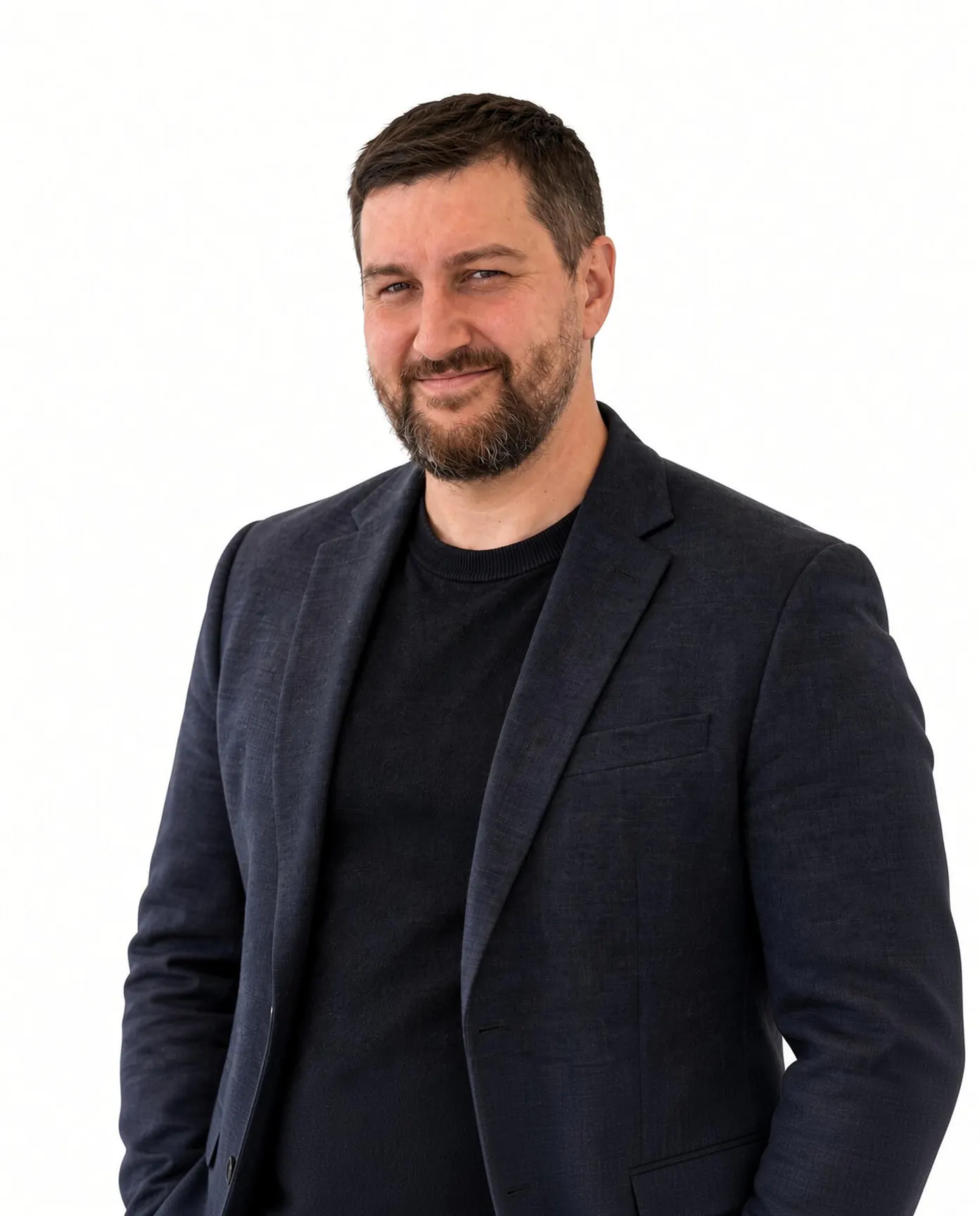
Who you are talking to
I am Tim Rutte. More than 20 years in software development, most of it in systems that were already running before I arrived. You talk to the person who touches your code, from the first call to the handover.
Working together
You do not need to bring a particular setup. I adapt the engagement to how your company works and how much responsibility you want to hand over.
If knowledge and responsibilities already sit with you, I join wherever additional experience is needed. Inside your workflows, in direct contact, without creating a parallel track.
If you lack time or capacity internally, I take a clearly scoped piece of work from technical clarification through to production. You set the objective and constraints; I take care of the path there.
Whichever model you choose, you always know what is being built, which decisions are pending and what happens next. Billing follows the project and the model you prefer: clearly bounded work at a fixed price, longer or more open-ended work by time spent.
Continuity
Independent delivery does not create dependency on me. Everything required to develop and operate the result stays in your environment from day one and remains ready for handover throughout the engagement.
Code, cloud accounts, pipelines and secrets live in your systems. Operations never depend on a personal account or credentials that only I control.
Architecture decisions, operating procedures and known risks are documented where your team will find them and kept current as the work progresses.
Reproducible environments, automated deployments and regular handovers allow your team or another provider to continue without starting again.
The goal is not for you to depend on me permanently. The goal is for you to remain free to decide who develops the system next.
Client voices
“Great collaboration! Mr Rutte modernized our old PHP shop quickly and reliably, brought it up to date and built in many sensible improvements along the way. Communication was uncomplicated, deadlines were met – absolutely recommendable.”
Common questions
Because in most cases it fails. It competes with day-to-day business for years, has to reproduce undocumented behaviour, and delivers no value until the switchover. Retiring step by step is less spectacular, but it delivers earlier and can be stopped at any point. I have written up the reasoning in more detail in a separate article.
Yes, and that is part of the approach. New functionality preferably gets built in the new part of the system. That way every feature pays into the modernization instead of competing with it.
It depends on size and condition. What is defensible: an assessment in two to three weeks, first measurable results from week four. After that the modernization runs in steps whose order you can change or pause at any time.
That is the normal case. The first step is then characterization tests: they capture what the system does today, not what it ought to do. That gives you a net that makes behaviour changes visible before anyone touches the code.
Yes. The free Legacy Risk Score is a structured questionnaire covering release capability, safeguards, knowledge distribution and technical debt. You get a PDF report with a risk assessment and recommended actions, with no sales call attached.
Terms that come up here
Other services
Backends for SaaS and platforms that hold under real load: Go and PHP 8, event-driven, with tenant isolation and recovery designed in.
Learn moreFrom your own data centre or another cloud onto AWS, with a cost model before the move and a rollback path for every step.
Learn moreI find where your AWS budget leaks away, and cut it measurably without giving up performance or availability.
Learn moreSo that a single fault does not take the whole application with it: dependencies and single points of failure identified, recovery rehearsed rather than documented, changes delivered as Terraform.
Learn moreThe infrastructure behind AI systems that actually ship: MCP servers, controlled tool access, LLM integration with real permissions and cost control.
Learn moreReplacing manual workflows with real systems: wired into the software you already run, with permissions and an audit log instead of a chain of tools.
Learn more